Trending

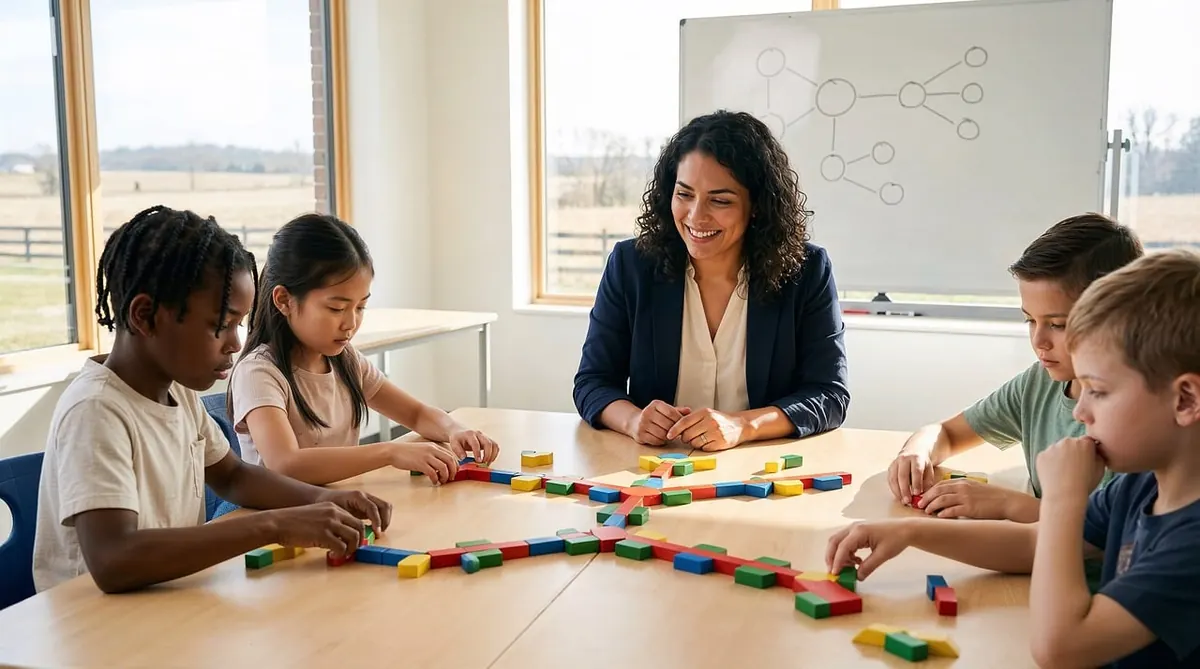
Parents who search for a homeschooling versus public school comparison usually aren't hunting for a winner. They want to know which option fits their particular child, their budget, and the shape of their week. The honest answer is that both settings can work well, and both can go badly when the fit is wrong. What follows is a side-by-side look at the five areas that decide most families' choices, plus a simple checklist you can work through at your own kitchen table.
This is where most debates get stuck, and it's usually because people compare the wrong thing. The useful question isn't "where will my child see more kids?" It's "what kind of social contact, with how many children, under whose supervision, and with how much choice?"
A public school puts your child in a room with twenty-five or thirty peers, five days a week. They eat lunch with classmates, work in groups, and deal with conflict with people they didn't choose. That's genuine preparation for adult life, and for many kids the daily variety is energizing. The downside is that large groups have a floor: a quiet child can go a whole year without a real conversation, and the social lessons picked up in the hallway aren't always the ones you'd choose.
Homeschooling flips the ratio. Interactions happen less by accident and more by design, so families build them on purpose: a co-op that meets Tuesdays, a soccer league, a library teen group, piano lessons, a part-time job, volunteering at the animal shelter. Friendships often run deeper and across a wider age range. The risk is equally real: if the week fills up with solo desk work and errands, social contact quietly disappears.
A concrete test: keep a notebook for one week and tally the hours your child spends with peers without an adult directing the activity. Do that for both scenarios you're weighing, and you'll see the difference quickly.
Public school isn't zero cost, and homeschooling isn't tuition-sized either. Comparing them honestly means listing the same categories on both sides of the page.
Two practical rules help. First, choose a monthly figure you can spend without stress, then build the plan to fit it rather than the other way around. Second, if the plan depends on one parent's income stopping, talk it through with a financial advisor before you commit, especially about insurance and long-term savings.
Public school hands you a sequence. Teachers, standards, and district-approved materials determine what gets covered and roughly when. For parents who don't want to plan lessons at 10 p.m., that structure is a gift. The trade-off is pacing: a child who already reads three years ahead may spend months on skills they mastered, and a child who needs extra time may feel rushed by the calendar.
Homeschooling gives you the steering wheel. You can choose a boxed curriculum with a scripted teacher's manual, build unit studies around your child's obsession with volcanoes, mix online classes with hands-on projects, or take an interest-led approach that follows whatever sparks curiosity that month. That freedom carries a specific responsibility: nobody else is checking for gaps. Keep a simple record of what you covered, review it every few months, and be honest about the subjects you've been avoiding.
One caution that matters: homeschool requirements differ enormously by state, province, and country. Some places ask for nothing beyond a notice of intent; others require portfolios, standardized testing, or specific subject hours. Confirm the rules with your state or provincial education department before you start, not after.
Public school runs on a fixed clock. Doors open at a set time, the day has bells, and evenings hold homework and activities. It's predictable, which suits kids who need routine and families with jobs that don't bend. It's also inflexible: a dentist appointment, a grandmother's birthday on a Tuesday, or a teenager who genuinely thinks better at 9 p.m. all become problems.
Homeschooling trades that rigidity for flexibility, and flexibility has a failure mode. Some families drift into a fog of half-finished mornings; others thrive. What separates them is rarely discipline and usually rhythm. Write a weekly pattern instead of a minute-by-minute schedule: math and reading in the morning, a long outdoor block after lunch, Tuesday for co-op, Friday for the library. Give older students a say in the shape of their day, then hold the agreed structure for a month before you change it.
This is the area where the two systems differ most sharply, and where general advice has limits.
In the United States, public schools are legally required to identify children with disabilities and provide a free appropriate public education, which may include evaluation, an IEP or a 504 plan, and services such as speech, occupational therapy, or a classroom aide. That framework can be a real support, though wait times, staff shortages, and quality vary widely from district to district.
Homeschooling offers pacing, a smaller sensory environment, and instruction tailored to how your child actually learns. What it doesn't automatically provide is a team of specialists. Parents often arrange and pay for therapy privately, and access to district services for homeschooled students differs by location. Some districts allow partial enrollment or therapy-only arrangements; others don't.
Before deciding, request a copy of your child's current evaluations and talk directly with your district's special education office. For anything involving legal rights or medical decisions, consult a special education advocate or attorney and your child's clinicians. Policies genuinely differ, and the details matter.
One last thing worth saying out loud: this decision is reversible. Plenty of families homeschool for two years and then enroll in public school, or the reverse, and their children adjust. Treat the first term as a trial with a defined end, keep decent records either way, and judge the choice by how your child is sleeping, eating, learning, and connecting with people. That tells you more than any comparison chart.
Photo: geralt / Pixabay